
NEXT-GENERATION
ELECTRIC MARINE
STABILIZATION
Compact. Reliable. Plug & Play.
A refined all-electric stabilization system engineered for modern vessels.

12-72 VDC
Wide input range

No AC Wiring
Simplified installation

Ideal for boats
under 30 feet

Up to 5 tons
Vessel capacity
Find the Right IG System
Four models to match your vessel’s needs.
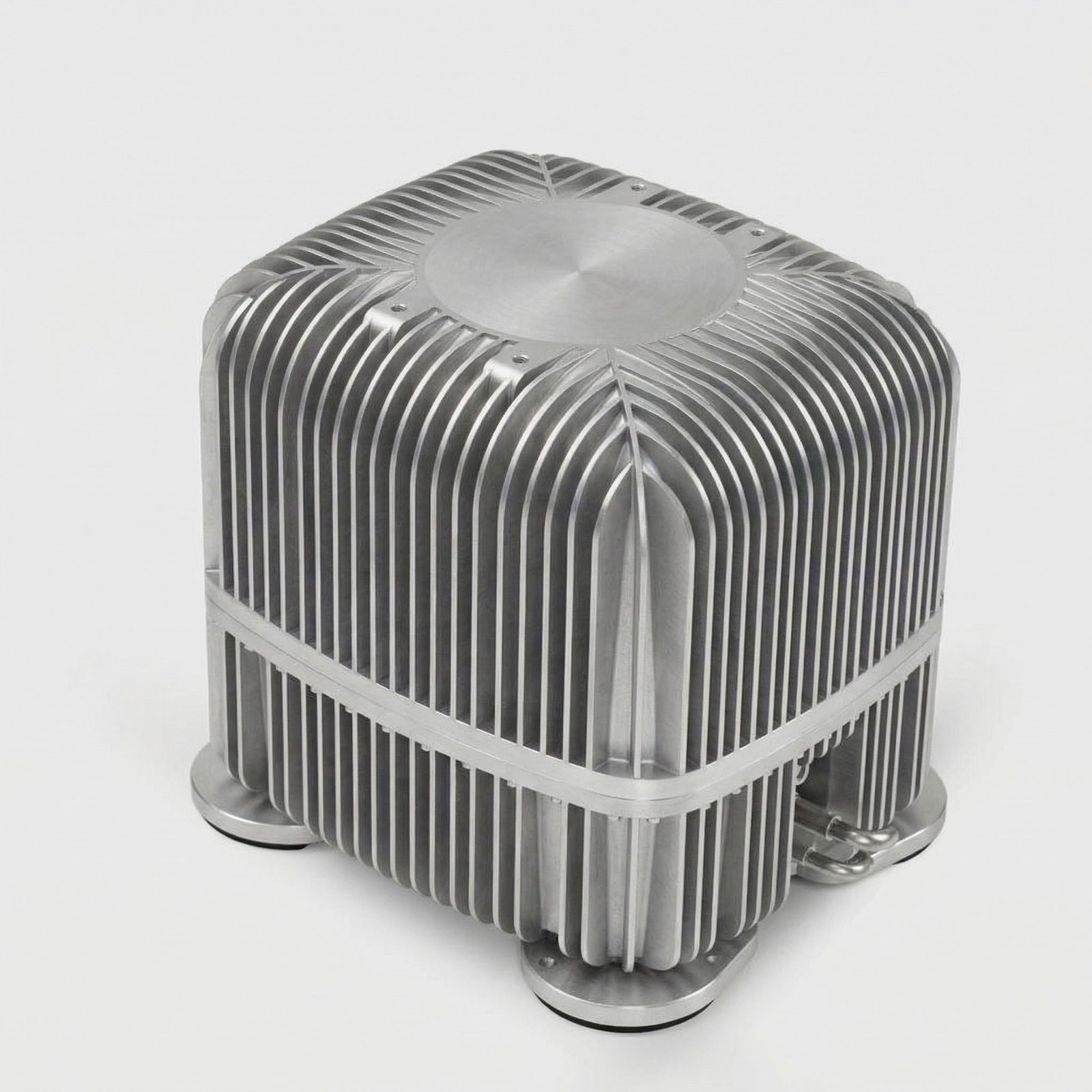
IG 03
For boats up to 1 ton
Rated speed 15,000 RPM
EUR 6,380
IG 05
For boats up to 2 tons
Rated speed 15,000 RPM
EUR 7,780
IG 07
For boats up to 4 tons
Rated speed 10,000 RPM
EUR 9,180
IG 1
For boats up to 5 tons
Rated speed 15,000 RPM
EUR 10,580
EX works factory, Ex taxes & duties
Subject to change at any time due to (market) price fluctuations. Always contact us for more detailed information.
IG Series Gyro Stabilizer Models, Specifications & Pricing
Compare the four IG Series electric gyro stabilizers for boats. All models share the same DC-powered, plug & play platform.
IG Series models, vessel capacity, rated speed and price
| Model | Boat weight | Rated speed | Price (ex works, ex taxes & duties) |
|---|---|---|---|
|
IG 03 |
Up to 1 ton |
15,000 RPM |
EUR 6,380 |
|
IG 05 |
Up to 2 tons |
15,000 RPM |
EUR 7,780 |
|
IG 07 |
Up to 4 tons |
10,000 RPM |
EUR 9,180 |
|
IG 1 |
Up to 5 tons |
15,000 RPM |
EUR 10,580 |
Specifications common to the IG Series
| Power input | 12–72 VDC, connects to your existing battery bank |
|---|---|
|
AC wiring |
Not required, no inverter needed |
|
Suitable vessels |
Boats under 30 feet, up to 5 tons |
|
Control |
Full active control |
|
Weight |
75–115 kg |
|
Approx. dimensions |
0.34 m × 0.38 m × 0.39 m |
|
Protection |
Water resistant |
Prices are ex works factory, excluding taxes and duties, and are subject to change at any time due to market price fluctuations. Always contact us for more detailed information.
Which IG Series Model Fits Your Boat?
Choose by your boat’s weight: IG 03 for boats up to 1 ton, IG 05 up to 2 tons, IG 07 up to 4 tons and IG 1 up to 5 tons. If your boat is close to a limit, or you are not sure, tell us about the vessel and we will recommend the most suitable gyro stabilizer.
Why Choose IG Series Electric Marine Gyro Stabilizer?
Built for small-boat owners who want less roll without a complicated installation. This is what sets the IG Series apart from conventional boat stabilizer (boat stabiliser) and fin stabilizer systems.
Compact & Lightweight Design for Small Boats
At 75–115 kg and roughly 0.34 × 0.38 × 0.39 m, the IG Series is a compact gyro stabilizer sized for boats under 30 ft. A smaller, lighter unit means less weight to carry and less compromise on payload and trim.
Full Active Control vs. Semi-Active Systems
The IG Series is a fully active gyro stabilizer. Its control system measures the boat’s roll and actively commands the gyro to oppose it, rather than reacting less directly to motion like semi-active designs.
DC-Powered, No AC Wiring Required
Run it straight from your existing battery bank on a wide 12–72 VDC input. No AC cabling and no extra inverter, so installation is simpler than with AC-powered stabilizers.
Real-Time Monitoring & Low Maintenance
Keep track of system status in real time. A design engineered for reliability keeps after-sales risk, servicing and running costs low.
More About IG Series Electric Gyro Stabilizers
Reliability is what separates a gyro stabilizer you forget about from one you worry about. The engineering approach behind Decho gyro stabilizers is built on six environmental adaptation tests that push the hardware well beyond normal operating conditions, long before a unit ever reaches salt water.
A laboratory swing table reproduces the rolling of a boat at sea, with excursions of up to ±30° and roll periods from 3 to 10 seconds. It exposes structural resonance, checks that the precision bearings handle constantly changing loads, and confirms that the control system reads the simulated motion and delivers a precisely opposing stabilizing torque, with frame angular-speed fluctuation held below 0.5%.
Cycling between −20 °C and +60 °C at 95% relative humidity ages the electronics in fast-forward. It reveals condensation problems, weak conformal coating, hardening seals, brittle connector housings and component drift. The fixes include better-sealed connectors, multi-layer conformal coating, wider-temperature components and improved thermal management, which cut electronic failure rates and extend service life.
Multi-axis vibration (X, Y and Z) uncovers rotor imbalance, weak solder joints and harness stress, and confirms the bearings have real margin for unexpected overloads. High-G shock pulses along the vertical axis simulate wave slamming and verify that the flywheel emergency brake can stop the flywheel without locking up or being damaged.
Salt-laden air is one of the most destructive elements at sea. Components are exposed to 240 hours of continuous neutral salt spray (5% sodium chloride). Passing it calls for hermetic or near-hermetic sealing and a multi-layer coating system of primer, intermediate coat and UV-stable topcoat, with extra protection for critical fasteners.
Repeated pounding from waves causes fatigue, where microscopic cracks grow until a part fails without warning. A series of 1000 controlled high-energy jolts exposes weak points such as weld toes and sharp casting corners. Finite element analysis, smoother load paths, redesigned weld profiles and fatigue-resistant materials then raise structural durability.
Test data does not get filed away. Baseline vibration signatures support condition monitoring, every anomaly feeds failure mode and effects analysis (FMEA), and the data helps build a digital twin for simulating new scenarios. The aim is to find potential failure points during development rather than at sea.
Owners and operators get less unplanned downtime and more predictable maintenance. Procurement teams can compare total cost of ownership rather than purchase price alone. Captains and crew get a safety-relevant system that performs as expected, plus steadier comfort on board.
Plug & Play
Featuring a wide-range 12-72 VDC input, the system integrates seamlessly with your vessel’s existing battery bank for immediate operation.
Simplified Deployment: DC Gyro Stabilizer, No AC Wiring
Bypass the complexities of AC cabling and the need for additional inverters.
For vessels under 30 feet, this is the most streamlined turnkey solution available on the market. Whether your boat runs a 12V, 24V or 48V system, the IG Series DC gyro stabilizer connects directly to your battery bank.

Easy to connect

No need for AC wiring

Ideal solution for boats under 30 feet

Water Resistant

75 kg-115 kg

0.34 mx 0.38 mx 0.39 m (Approx. dimensions)
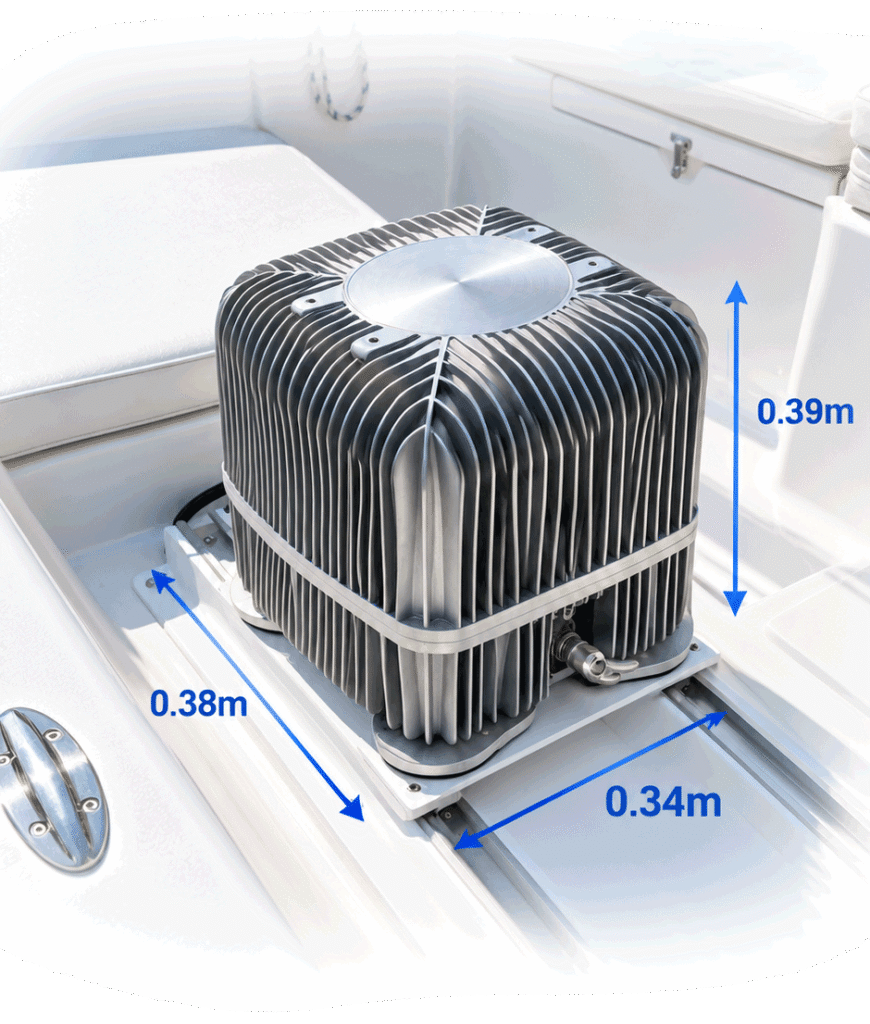

The result is a refined,
high-performance architecture
The more compact, incredibly lightweight, and engineered for uncompromising reliability.

Compact System

High Reliability

Light Weight
Marine Gyro Stabiliser Explained:
Anti-Roll Gyro for Better Boat Stability
Gyro stabilizer, gyro stabiliser, gyroscope stabilizer, boat gyro, anti-rolling gyro: owners search with many names, and they all describe the same idea. A spinning flywheel produces a counter-torque that reduces roll.
Gyro Stabiliser, Gyroscope Stabilizer, Anti-Roll Gyro: Same Thing?
Yes. “Stabiliser” is the British spelling of stabilizer, and “anti-roll gyro” or “anti-rolling gyro” simply names the job: reducing roll. The IG Series is an electric marine gyro stabiliser built on this principle.
Less Roll, More Comfort and Stability on Board
By opposing roll, a boat gyro makes the vessel feel steadier at anchor, while drifting and underway. It reduces rolling motion for comfort and safer movement on deck; it does not replace good hull design or correct loading.
Boat, Marine or Yacht Stabiliser: Who Is the IG Series For?
The IG Series is a boat stabiliser for small boats and small yachts under 30 ft (about 9 m) and up to 5 tons. For larger yachts or ships, a different system would be needed, so please tell us about your vessel.
Gyro Stabilizer for Boats: Frequently Asked Questions
A boat gyro stabilizer contains a flywheel spinning at high speed. When waves make the boat roll, the gyro generates a counter-torque through precession that pushes back against the roll. Because it does not rely on the boat’s forward speed, a marine gyro stabilizer reduces rolling at anchor, while drifting and underway.
The IG Series is designed for boats under 30 feet (about 9 m) and up to 5 tons. IG 03 covers boats up to 1 ton, IG 05 up to 2 tons, IG 07 up to 4 tons and IG 1 up to 5 tons. Tell us about your boat and we will help you pick the right model.
No. The IG Series is a DC gyro stabilizer with a wide 12–72 VDC input, so it connects to your boat’s existing battery bank. There is no AC wiring and no extra inverter to install.
Yes. The IG Series accepts any DC supply from 12 to 72 VDC, which covers common 12V, 24V and 48V onboard systems.
IG Series prices start at EUR 6,380 for the IG 03 and go up to EUR 10,580 for the IG 1. Prices are ex works factory, excluding taxes and duties, and are subject to change with market price fluctuations. Contact us for a current quotation.
The IG Series weighs between 75 kg and 115 kg and measures approximately 0.34 m × 0.38 m × 0.39 m, a compact size suited to small boats.
An actively controlled gyro stabilizer uses its control system to measure the boat’s roll and actively command the gyro to oppose it. Semi-active designs respond less directly to the boat’s motion. The IG Series is a fully active-control system.
The IG Series is water resistant and engineered for the marine environment. The engineering approach behind Decho gyro stabilizers includes swing table, temperature and humidity cycling, vibration, shock, salt spray and repeated-bumping tests, described in the section above.
High product reliability removes as many after-sales risks as possible at the design and manufacturing stage, which is how we keep maintenance and service concerns low for owners.
Our stabilizer systems are supplied through professionals. Contact us and we will help you find the right EU installer for your boat.
If you are comparing gyro stabilizers for a small boat, look at weight, power input, installation requirements and price side by side. The IG Series is a compact, DC-powered system with prices starting at EUR 6,380 (ex works, ex taxes and duties). Contact us with your boat details and we will help you compare.
If you are comparing gyro stabilizers for a small boat, look at weight, power input, installation requirements and price side by side. The IG Series is a compact, DC-powered system with prices starting at EUR 6,380 (ex works, ex taxes and duties). Contact us with your boat details and we will help you compare.
Yes. Anti-roll gyro, anti-rolling gyro, gyroscope stabilizer and boat gyro are different names for a gyro stabilizer: a high-speed flywheel that produces a counter-torque against the boat’s roll.
It reduces rolling motion, so the boat feels steadier at anchor, while drifting and underway. It improves comfort and onboard safety, but it does not change the hull’s design stability or replace correct loading and seamanship.
Ready to Simplify Your Vessel's Stabilization?
As Naval Architects and Engineers we have a proven long term international expertise in boat stability. Both from a manufacturing as well as a design and engineering perspective. Tell us about your boat and we’ll help you identify the most suitable IG system.